 EN
 AR



Handmade product marketing is about more than posting beautiful photos or waiting for customers to discover your work. If you create high-quality handmade products but struggle to attract buyers, the problem may be how you present, promote, and sell them. In this guide, you’ll discover seven common marketing mistakes and practical ways to fix them.
Making something by hand takes patience, skill, and time. But a customer scrolling through Instagram or Facebook cannot feel all that effort through a photo alone. Before they buy, they need to notice the product, understand what makes it special, feel confident in the seller, and know what to do next.
Here are seven common marketing problems that can hold a handmade business back — and practical ways to start fixing them without needing a large budget.
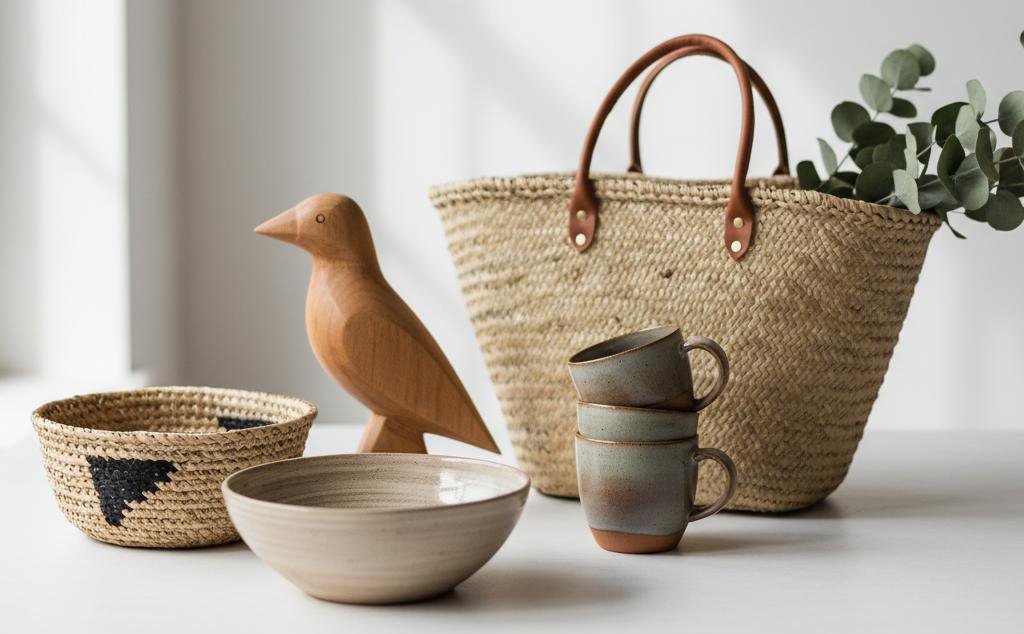
01 An Inconsistent Visual Identity Makes Your Page Harder to Trust
Imagine seeing one product photographed in yellow indoor light, the next with a strong filter, and the next against a busy background. Even when every item is well made, the page can feel unplanned. A new visitor may struggle to recognize your style or understand what your brand stands for.
You do not need a costly studio or complicated design. You need a repeatable look that helps your products feel connected.
Choose one or two backgrounds, use consistent lighting, keep colors and typography simple, and apply the same visual approach across your posts. Review the result after a few weeks and adjust based on what looks clear and works well.
02 Posting by Mood Instead of Following a Simple Plan
Posting several times in one burst and then disappearing for weeks makes it harder to build a steady relationship with your audience. It can also leave you scrambling for ideas every time you want to publish something.
There is no single posting time or weekly frequency that works for every handmade business. Your available time, audience, product, and platform all matter. Start with a schedule you can realistically maintain rather than copying someone else's calendar.
Plan three useful posts for the coming week: one showing how a product is made, one answering a customer question, and one presenting a product with clear ordering information. If three posts are too much, start with one or two and stay consistent.
03 Asking People to Support You Instead of Showing Them the Value
When reach and sales are disappointing, it is understandable to feel frustrated. But repeated messages such as “Please support my small business” do not tell a potential customer why a product is right for them. They may invite sympathy without answering the questions that lead to a purchase.
Your story matters, but connect it to the care, usefulness, design, or meaning behind the product. Confidence does not mean pretending everything is perfect; it means explaining honestly what you make and why it may matter to the buyer.
Instead of only asking people to support your work, give them a reason to appreciate it.
Show a close-up of the finishing, explain the time or technique involved, or describe the problem the product solves. Keep the details truthful and specific to the item you are showing.
04 Selling in Every Post and Leaving No Room to Build Trust
If every post says “Buy now,” followers may not learn enough to understand your products or feel connected to your business. On the other hand, useful content with no clear path to buying can leave interested people unsure what to do.
You do not need to follow a rigid 80/20 formula. Aim for a healthy mix of content that helps people discover you, understand your work, trust your process, and buy when they are ready.
Rotate between behind-the-scenes clips, care tips, answers to common questions, customer feedback you have permission to share, product demonstrations, and direct offers. Make sure some posts clearly explain price or price range, availability, delivery, and how to order.
05 Beautiful Work With No Clear Reason to Choose Your Brand
“Because my products are beautiful” is a starting point, but it may not help a customer distinguish your work from similar options. People often compare more than appearance: they may care about personalization, materials, durability, gift packaging, the maker's style, or the experience of ordering.
Your brand identity is not just a logo. It is the combination of what you make, who it is for, what makes it different, and the experience people can expect from you.
Complete this sentence: “I make [type of product] for [type of customer or occasion], with a focus on [real difference].” Use the answer to guide your bio, product descriptions, photos, and content. Avoid claiming uniqueness unless you can explain it.
06 Making a Carefully Made Product Look Ordinary in Photos
Online, the photo is often the first experience a customer has with your product. A dark, blurry, shaky, or cluttered image can hide details that took you hours to perfect. That does not mean you need an expensive camera: careful light, framing, and focus can make a meaningful difference.
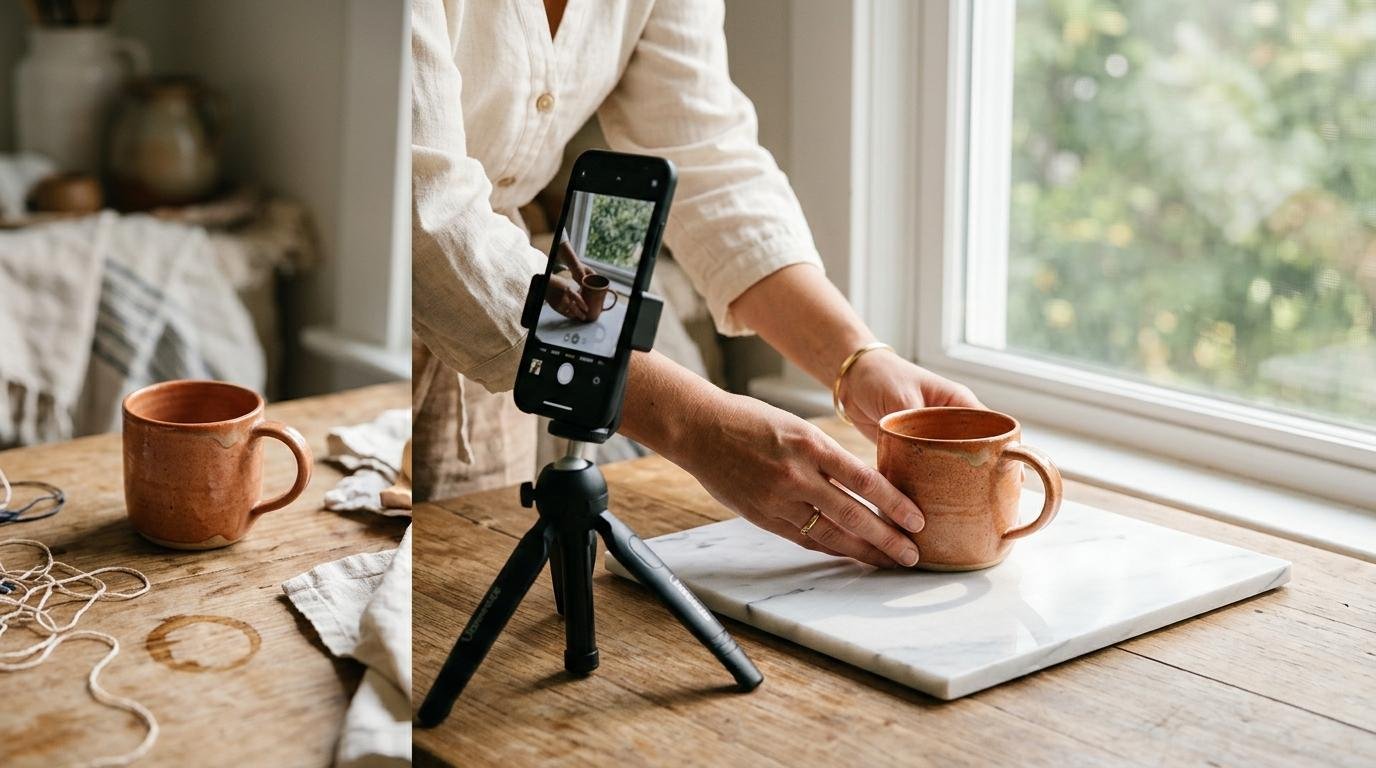
Try daylight near a window, a clean background, and a steady phone. Take one full-product photo, one close-up that shows texture or finishing, and one photo that gives a sense of size or use. Check that the colors look reasonably close to the real item.
07 Creating Content Without Telling People What to Do Next
A person may like a product video but still leave without ordering because key information is missing. Is the item available? Can it be customized? How much does it cost? Where do you deliver? Should they comment, send a message, or visit a shop link?
A call to action (CTA) is not about pressuring people. It is a clear next step that removes uncertainty.
End each sales post with one specific action, such as: “Available in two colors. Send us a message for the current price and delivery options.” Use only details that are accurate, and make sure someone can respond to incoming messages.
08 A Practical Plan to Improve Your Handmade Product Marketing
You do not have to rebuild everything overnight. Start with a small plan that improves the customer journey step by step.
Make the page clearer
Choose a consistent visual style, update your bio, and make it easy to understand what you sell, where you deliver, and how customers can contact you.
Publish with purpose
Prepare a manageable mix of process content, helpful answers, and product posts. Each post should have one main message and suit the format you choose.
Make buying easier
Check that prices or pricing guidance, product options, delivery details, and ordering steps are easy to find. Reply to genuine questions clearly and politely.
Learn from real responses
Review saves, shares, useful questions, profile visits, messages, and completed orders — not likes alone. Repeat what helps customers move closer to a purchase and improve what confuses them.
One important note: paid advertising is not automatically wrong for a new page, and there is no universal requirement to publish a fixed number of videos before running ads. But advertising works best when the offer is clear, the product page or profile builds trust, and you have a way to measure whether the spend is producing meaningful results. If those basics are missing, improve them before increasing your budget.
FAQ Questions Handmade Business Owners Ask
I have very few followers. Should I start running ads?
A small following alone does not mean you should avoid ads. First check whether your product, offer, photos, ordering process, and delivery information are clear. If you do test ads, start with a budget you can afford to lose, define one goal, and measure messages or sales rather than reach alone.
Should I focus on Reels or product photos?
Use the format that best communicates the product. Short videos can show process, movement, and scale; photos can show details, colors, and product options clearly. Test both and compare the responses that matter to your business.
How should I price handmade products?
Start by calculating materials, packaging, labor time, overhead, selling fees, and delivery costs where relevant. Then set a profit margin that supports the business and compare the final price with the value and alternatives customers see. A fixed “30% profit” rule will not suit every product or business.
How often should I post on social media?
There is no universal number or perfect posting time. Choose a realistic schedule you can maintain, then use your account insights and actual customer enquiries to learn when and what your audience responds to.
What if my products are good but I still do not get orders?
Look at the full journey: are the right people seeing the product, is its value clear, do the photos answer their questions, is the price understandable, and is ordering easy? Ask a few potential customers what is unclear, then test one improvement at a time.
Your craft is the foundation. Clear positioning, useful content, consistent presentation, and an easy buying process help more people recognize its value. You do not need to do everything perfectly to begin — you need to make the next step clearer for the person who may want to buy.
Your Handmade Work Deserves More Than a Beautiful Photo
When design, content, and a clear customer journey work together, your business has a better chance to stand out and grow. Explore how I approach creative work and the services that may fit your next step.

Creative design, websites, and digital experiences that help businesses communicate their value and grow.